 Call us now:


We all walk. It’s as natural as breathing, something we learned as toddlers and rarely give a second thought to. But what if this seemingly simple act of your walking pattern, or walking gait is silently contributing to that nagging knee pain, persistent backache, stiff hips, or even your constant fatigue?
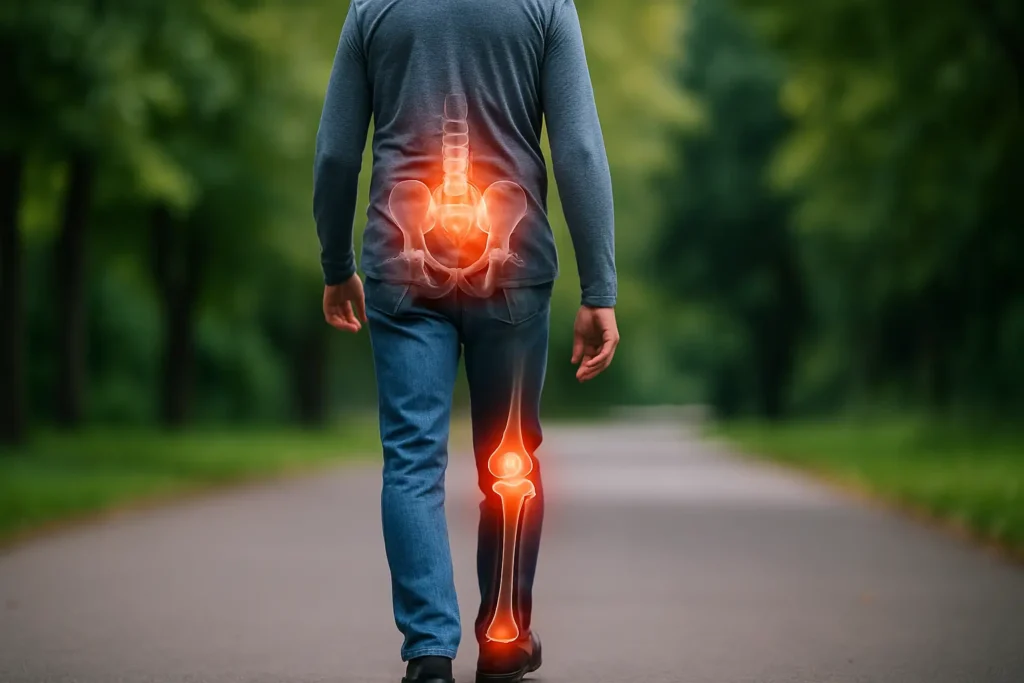
At Activ Insight, we see it all the time. People come to us searching for answers, and often, the root cause isn’t where they expect. It’s not just a “bad knee” or a “tight back”, but it’s often deeply connected to how they move.
Let’s unpack this. Understanding your walking style could be a game-changer for your overall health and well-being.
Table of Contents
What Exactly Is Your Walking Pattern?
Think of your walking pattern as the unique dance your body performs every time you take a step. It’s a complex, coordinated effort involving your:
- Feet, ankles, knees, hips, and spine
- Muscles and joints working in harmony
- Your balance system
- And even your brain and nerves
While everyone walks a little differently, if your gait isn’t properly aligned, you may feel your feet roll inwards (like overpronation) or if your hips aren’t moving efficiently, then it can create stress and strain that builds up over time, eventually leading to longstanding pain.
How Your Walk Impacts Your Joints ?
Your joints are the unsung heroes of movement, and your walking pattern plays a massive role in how well they hold up.
1. Your Knees: The Shock Absorbers
Your knees take a beating with every step. If your gait is off, it can lead to:
- Excessive pressure on your kneecap
- Unnecessary stress on ligaments
- Accelerated cartilage wear, potentially leading to arthritis
Often, knee pain doesn’t need invasive solutions; it simply needs smarter movement.
2. Your Hips: The Powerhouse
Your hips are the core of your walking motion. If they’re not stable and strong, you might experience:
- Groin or outer hip pain
- Added pressure on your lower back
- Compromised posture
Weak glute muscles or a tilted pelvis can make walking feel like a chore, rather than a natural flow.
3. Your Feet and Ankles: The Foundation
Every step begins with your feet. If their movement is improper, it can lead to issues like:
- Flat feet or bunions
- Heel pain (think plantar fasciitis)
- Ankle instability or frequent sprains
When your foundation isn’t right, the ripple effect can be felt throughout your entire body.
Your Spine and Posture: The Central Axis
Your spine is designed for graceful movement, but a poor gait can put incredible strain on your back, especially if:
- Your pelvis is twisted
- Your steps are uneven
- You lean forward when you walk
This can result in:
- Persistent lower back strain
- A tendency to slouch (rounded shoulders, hunching)
- Neck pain or even tension headaches
Over time, your posture suffers, and your muscles become constantly fatigued from working overtime.
The Domino Effect: One Problem Leads to Another
Here’s the kicker: your body is incredibly interconnected. If one part isn’t moving efficiently, another part will compensate, often working harder than it should. For example:
- Tight calves can subtly alter how your knees bend.
- Weak hips can force your back to overcompensate.
- An improper foot strike can even contribute to shoulder tension.
These patterns create a chain reaction, spreading discomfort and inefficiency throughout your entire system.
Your Energy Levels: The Hidden Link
Believe it or not, how you walk directly impacts your daily energy.
When your gait is inefficient:
- Your muscles have to expend more energy for basic movements.
- You might take shallower breaths, reducing oxygen flow.
- You’ll tire out quicker, even from light activity.
Imagine driving a car with misaligned wheels. It uses more fuel and feels sluggish. When your walking becomes smooth and aligned, you’ll feel lighter, faster, and more vibrant.
Subtle Signs You Might Have a Gait Issue
You don’t need to be limping to have a problem. Keep an eye out for these subtle clues:
- Uneven wear on your shoes (one side or one shoe wearing faster).
- One leg consistently feels heavier or longer.
- Back or knee pain that crops up after a walk.
- Feeling unusually tired from mild physical activity.
- Shoulder or neck tension that arises while you walk.
- Tightness that seems to move around different parts of your body.
These are your body’s subtle whispers, signaling that it’s compensating for inefficient movement.
Real-Life Transformation: Tiredness & Back Pain Solved
Let us tell you about a 42-year-old IT professional who came to Activ Insight. She was constantly battling lower back pain and feeling perpetually drained. She spent most of her day seated but walked quite a bit for errands.
Our detailed gait analysis revealed:
- A rotated pelvis.
- Weak core muscles.
- A forward-leaning walking style.
We didn’t just offer quick fixes. Instead, we designed a personalized movement plan focused on correcting her walking pattern. The results? In just six weeks, she was pain-free and reported a 50% increase in energy at work! It wasn’t about painkillers; it was about empowering her body to move correctly.
What is Gait Analysis? Your Movement Blueprint
At Activ Insight, we take the guesswork out of understanding your movement. Gait analysis is a sophisticated, scientific study of how you walk or run. We use cutting-edge technology:
- Motion sensors to precisely track your joint movements in 3D.
- Advanced software to process and analyze this complex data.
- EMG biofeedback to literally see which muscles are overworking or underworking.
This comprehensive approach gives us a complete, head-to-toe picture of your movement, allowing us to spot potential issues before they lead to long-term damage.
The Incredible Benefits of Correcting Your Gait
Correcting how you walk can profoundly transform how your entire body functions:
| Benefit | What It Means |
| Protects Joints | Less wear and tear on your knees, hips, and ankles. |
| Better Posture | Your spine and pelvis naturally align. |
| More Energy | You move efficiently, getting tired less often. |
| Balanced Muscles | No more overused or weak spots. |
| Fewer Injuries | Catch problems early, before they become serious. |
Walking: Your Natural Therapy
In a world overflowing with complex treatments and gadgets, sometimes the most profound healing begins with something remarkably simple: walking better.
Fixing your gait helps to:
- Strengthen your core and hips naturally.
- Align your posture with minimal effort.
- Reduce the need for long-term medication.
- Prevent future injuries or surgeries.
It’s more than just movement; it’s about unlocking a better quality of life.
Final Thoughts
Pain, stiffness, and low energy might seem like “normal” parts of modern life, but they don’t have to be. Often, they are simply your body’s way of signaling that something in your movement pattern is off.
Your walking style affects you from head to toe. Every single step you take either helps or hinders your body’s optimal function.
“Fix the way you move, and you fix the way you live.”
At Activ Insight, we blend science with genuine care to help you move better, feel better, and live a pain-free, more energetic life.
Ready to discover how your walk might be impacting you? Let’s talk.